


AI Marketing Solutions in St. Louis: A 2026 Buyer’s Guide
What if your next growth move isn’t more marketing, but fixing the point where attention stops becoming a sales conversation? For St. Louis businesses, AI marketing solutions St. Louis can include everything from faster content creation to more consistent lead follow-up. More tools won’t help if qualified prospects still slip between social engagement and a meaningful next step.
It’s frustrating to see activity without a clear path to revenue. Adding AI simply because competitors are discussing it can create more complexity without solving the problem. A better approach is to identify the bottleneck first, then choose a solution that supports a specific business function.
This guide compares AI marketing approaches by the problem they address, including lead flow, system efficiency, and market authority. You’ll see how visibility, diagnosis, and follow-up can work together, what to assess before adopting another tool, and how to choose a practical next step for your business in St. Louis and nearby communities.
Key Takeaways
- Evaluate AI by the business function it supports, not the number of features it offers.
- Compare AI marketing solutions St. Louis businesses can use by matching each approach to a specific growth bottleneck.
- Trace how prospects move from discovery to follow-up to identify gaps in the workflow.
- Choose a practical indicator, such as response consistency or qualified conversations, to assess whether a solution is helping.
- Consider how AI System Diagnostic, Social Lead Web, and Authority Accelerator address different needs across efficiency, lead flow, and market presence.
What AI Marketing Solutions in St. Louis Should Actually Improve
AI marketing solutions are systems that use artificial intelligence to support customer discovery, lead handling, marketing analysis, or market authority. The useful question isn’t how much AI a solution contains. It’s whether it improves a real business process. For foundational context, Artificial Intelligence in Marketing describes how techniques such as machine learning can be applied to marketing tasks.
For a St. Louis service business, a useful improvement might be clearer visibility into inquiries, more consistent follow-up, better insight into the customer journey, or stronger professional positioning. A dashboard or automated message is only a feature. It matters when it addresses a specific friction point without making the workflow harder to manage.
Which marketing bottlenecks can AI systems address?
Trace the journey from first discovery to a qualified conversation. A prospect might see a social post, send a message, and then wait while the inquiry gets buried among other tasks. That’s a lead-flow gap. Another business might handle inquiries reliably but spend too much time on repetitive processes, or struggle to explain what makes its expertise relevant.
These are different problems, so they call for different solution types:
- Lead flow: Find where social engagement or inquiries stop progressing toward a meaningful sales conversation.
- Operational efficiency: Identify repetitive steps or handoffs that consume attention and could be handled more consistently.
- Market authority: Pinpoint where a business’s expertise and value aren’t coming through clearly to prospective customers.
Start with the handoff that creates the most friction. Review what happens after someone discovers the business, makes an inquiry, receives a response, or is passed to sales. The gap might be visibility, response consistency, qualification, or positioning. Name the issue before choosing technology. For example, if inquiries arrive through social channels but no one consistently owns the next step, focus on the lead handoff rather than adding another content tool.
Why local businesses need fit before more technology
In St. Louis and nearby communities, lean service teams may be balancing customer work, business development, and marketing. A tool that adds another inbox or process can increase the burden instead of reducing it. The right fit depends on how inquiries currently arrive, who handles them, and what a prospective customer needs before taking the next step.
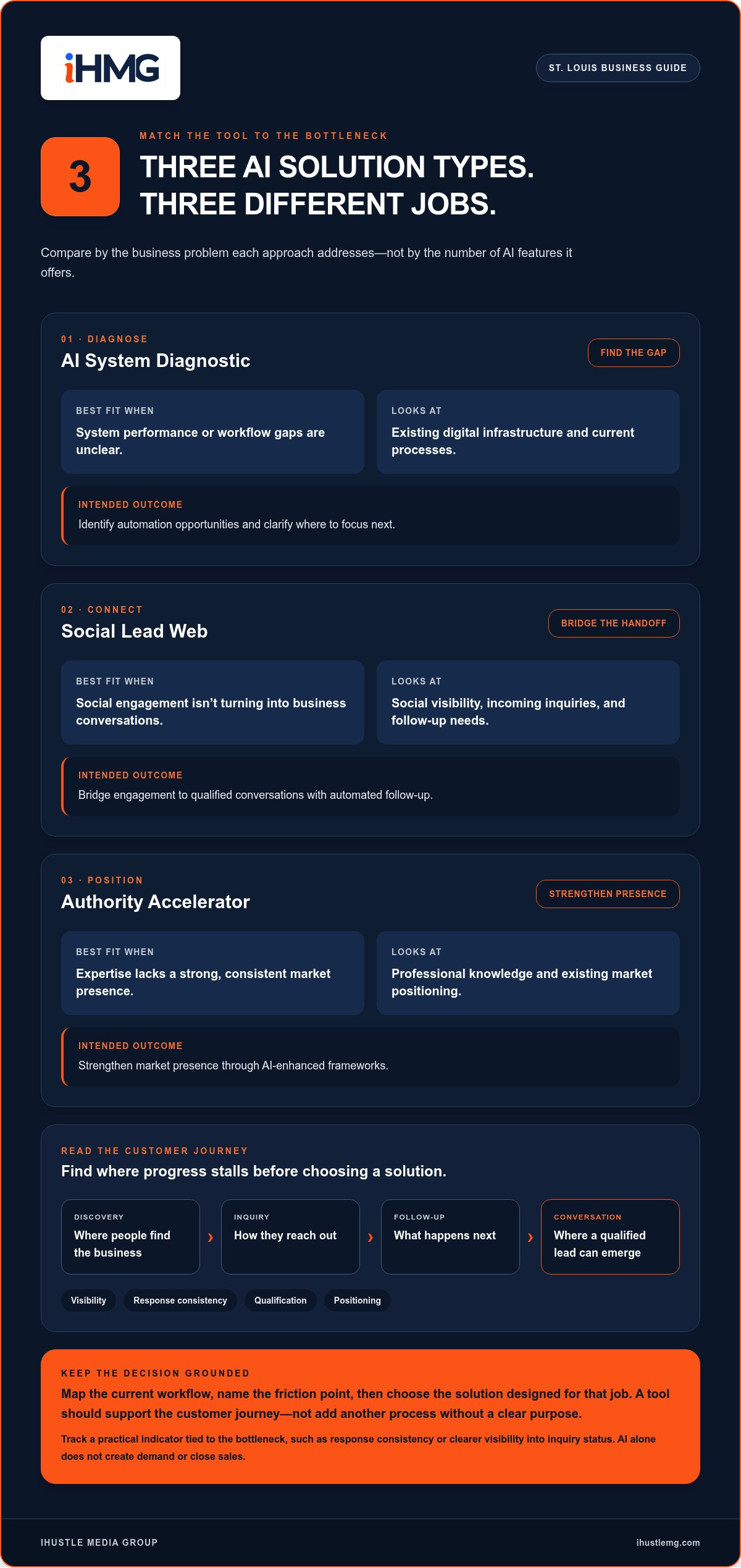
Map the existing workflow: where people find the business, how they reach out, what happens next, and where progress stalls. Then define an indicator tied to that bottleneck, such as more consistent responses or clearer visibility into inquiry status. AI marketing solutions St. Louis businesses consider should support the customer journey already in place, not assume a new tool will create demand or close sales on its own.
Compare AI Marketing Solutions for St. Louis Businesses by Their Job
Compare AI marketing solutions St. Louis businesses consider by the bottleneck they address, not by how many AI features they advertise. Some solutions help reveal where a workflow is breaking down. Others support a defined growth function, such as moving social engagement toward qualified conversations or strengthening market authority. Harvard’s overview of the future of marketing offers broader context for AI’s role in marketing strategy.
| Solution type | Best-fit bottleneck | Typical input | Intended business outcome |
|---|---|---|---|
| AI System Diagnostic | Unclear system performance or workflow gaps | Existing digital infrastructure and current processes | Identify automation opportunities and clarify where to focus next |
| Social Lead Web | Social engagement isn’t turning into business conversations | Social visibility, incoming inquiries, and follow-up needs | Bridge engagement to qualified conversations with automated follow-up |
| Authority Accelerator | Expertise lacks a strong, consistent market presence | Professional knowledge and existing market positioning | Strengthen presence through AI-enhanced frameworks |
When does a business need diagnosis, lead conversion, or authority building?
Choose diagnosis when you can’t clearly see how systems and handoffs are performing. The AI business diagnostic tool guide explores how a diagnostic approach can help surface gaps in lead architecture. Diagnosis identifies opportunities and clarifies where to focus; it isn’t a substitute for a system designed to perform a specific growth function.
If social attention is present but inquiries aren’t becoming qualified conversations, focus on lead conversion. If a professional’s expertise isn’t translating into recognition, authority building may be the more relevant path. Let the business problem determine the solution, rather than choosing based on the appeal of a feature.
How to compare systems without getting distracted by AI features
Map the process before comparing tools: who handles each step, which platforms are involved, and where one person or system hands work to another. Then ask which part the solution is intended to improve and what visible change would indicate progress. If qualification is the central challenge, use this automated lead qualification guide to explore that decision more closely.
For a diagnostic-first starting point, explore AI System Diagnostic to assess existing infrastructure and identify automation opportunities.
Why More AI Marketing Tools May Not Fix a St. Louis Lead-Flow Problem
A new tool can create more activity without repairing the process underneath it. If inquiries still go unanswered, prospects don’t know what happens next, or the team can’t tell which conversations are qualified, another content generator or dashboard may make the broken handoff harder to see.
Consider a service business that responds to low lead volume by posting more often on social media. More posts may increase visibility, but they won’t fix an unclear path from a prospect’s comment or message to timely, relevant follow-up. The symptom is low conversion from social attention. The process gap may be that no one owns the next step. The social media lead automation guide explores the workflow between engagement and lead handling.
How to tell whether the problem is traffic, follow-up, or positioning
Separate the three before choosing a solution. Traffic is the discovery question: are the right people finding the business? Follow-up starts after interest appears: does an inquiry receive a clear, consistent next step? Positioning is about understanding: can prospects quickly see the business’s expertise and why it fits their needs?
These problems can look alike from the sales desk, but they need different responses. If the right audience isn’t discovering the business, improving follow-up alone won’t solve the visibility issue. If prospects arrive but stall after reaching out, more exposure may add inquiries without fixing the handoff. A diagnostic approach can help clarify which gap is driving the friction before choosing among AI marketing solutions St. Louis businesses might consider.
What AI can support, and what it cannot replace
AI can support a defined workflow by organizing information, helping a team analyze patterns, or making repeatable follow-up more consistent. Its value depends on clear inputs, an understood process, and a useful next action. Automating an ambiguous step doesn’t make it effective. It can reproduce the confusion faster.
People still need to shape customer relationships and make business decisions. A system can help surface an inquiry or support a repeatable response, but human judgment matters when understanding context, building trust, and handling a nuanced conversation. No AI tool can promise demand, qualified leads, or effortless growth by itself.
Use a simple test: name the current friction, identify the handoff where it occurs, and decide what should happen differently. Then match the system to that job. This lets technology support a growth process instead of becoming another source of activity.
A Practical Checklist for Choosing AI Marketing Solutions in St. Louis
A useful buying decision starts with your workflow, not a product demo. Use this checklist to identify what needs to change, then match the system to your team’s actual customer journey.
What to define before adopting an AI marketing system
- 1. Name the bottleneck. Describe the issue in plain language, such as “inquiries don’t receive consistent follow-up” or “prospects don’t understand our expertise.” Pinpoint where it appears, from discovery through inquiry and sales conversations.
- 2. Map the workflow. Note who handles each step, which platforms are involved, and where information passes from one person or system to another. Include informal steps, such as checking social messages between appointments.
- 3. Choose a solution type. If the cause is unclear, begin with diagnosis. If prospects engage but don’t progress, focus on lead handling. If your expertise is hard to recognize, consider authority building. Don’t choose a system simply because its feature list is longer.
- 4. Define an indicator. Pick a practical sign to review, such as response consistency, qualified conversations, or clearer visibility into inquiry status. An indicator helps your team evaluate fit; it isn’t a promise of a particular result.
- 5. Review the fit. Check whether the solution supports the workflow you mapped and the conversations your business needs. Consider what your team can realistically maintain before adding more steps or features.
How to assess fit for your team and service area
Team capacity matters. A small service business may need a clearer way to handle inquiries before adding another channel or reporting routine. Prioritize one improvement, observe how it fits existing habits, and expand only when the next bottleneck is clear. More systems aren’t automatically better systems.
Local context can shape the customer journey, but it shouldn’t dictate a one-size-fits-all setup. A business serving St. Charles, St. Peters, or Chesterfield may need to consider how customers discover and contact it across those communities. The deciding factor is still the workflow: where prospects enter, what they need next, and who follows through.
For AI marketing solutions St. Louis businesses can use effectively, keep the selection tied to a defined gap. iHustle’s AI-driven offerings address distinct needs across system diagnosis, social lead conversion, and market authority. Explore iHustle’s AI marketing solutions to identify a practical next step for your growth system.
How iHustle Media Group Connects AI Diagnosis, Leads, and Authority
iHustle Media Group serves businesses in St. Louis and nearby communities with AI-driven systems focused on lead generation, conversion, and authority. The starting point isn’t adding technology for its own sake. It’s matching the next step to the growth challenge in front of you.
Match iHustle’s systems to the growth challenge
AI System Diagnostic is the assessment path for businesses that need a clearer view of their existing digital systems. It evaluates current infrastructure and identifies automation opportunities, helping clarify where a process needs attention before another tool is added.
Social Lead Web is designed for the handoff between social visibility and business conversations. It connects social engagement with qualified conversations and automated follow-up, addressing the gap that can form after someone shows interest.
Authority Accelerator serves a different purpose. It uses AI-enhanced frameworks to strengthen a professional’s market presence, supporting those who need their expertise and niche credibility to come through more clearly.
These systems aren’t interchangeable. Diagnosis helps identify opportunities; Social Lead Web focuses on lead flow; Authority Accelerator supports market presence. The right sequence depends on the problem. If the workflow is unclear, begin with insight. If social engagement isn’t progressing, focus on the lead handoff. If expertise lacks visibility, prioritize authority.
Take the next step with a clear growth priority
Before exploring AI marketing solutions St. Louis businesses can use, name your priority: diagnosis, conversion, or authority. That distinction keeps the next decision focused on a business need rather than a feature list.
iHustle Media Group serves St. Louis, St. Charles, St. Peters, Florissant, Hazelwood, Ferguson, and Chesterfield. Whether the immediate challenge is understanding your systems, connecting social interest to conversations, or strengthening your professional presence, start with the function that addresses the gap you’ve identified.
Explore iHustle Media Group’s AI marketing solutions and choose a practical next step aligned with your growth priority.
Turn Your Next Growth Priority Into a Clear Plan
The right AI system starts with a business need, not a feature list. First identify whether your main bottleneck is an unclear workflow, social engagement that doesn’t become qualified conversations, or market positioning that fails to show your expertise. Then choose an approach and an indicator that help you assess whether the process is moving in the right direction.
For businesses considering AI marketing solutions St. Louis, the distinction matters: AI System Diagnostic identifies automation opportunities in existing digital infrastructure, Social Lead Web connects social visibility with qualified conversations and automated follow-up, and Authority Accelerator supports professional market presence through AI-enhanced frameworks. Each serves a different function, so begin with the challenge that matters most to your growth system.
You don’t need to overhaul everything at once. Choose one priority, make the next step clear, and build from there. Explore iHustle Media Group’s AI marketing solutions to find a practical fit for your business. A focused first move can put stronger growth systems within reach.
Frequently Asked Questions
What are AI marketing solutions for small businesses?
AI marketing solutions for small businesses are systems that use artificial intelligence to support tasks such as handling inquiries, analyzing marketing activity, following up with prospects, or strengthening market presence. The right system addresses a defined need rather than adding technology for its own sake. For example, a business might use a diagnostic to identify workflow opportunities or a lead system to connect social engagement with follow-up.
How can AI marketing help a St. Louis business generate leads?
AI marketing solutions St. Louis businesses use can support lead generation by improving how prospects move from discovery to inquiry and follow-up. For instance, Social Lead Web connects social visibility with qualified conversations and automated follow-up. A system can help organize a repeatable process, but lead generation also depends on reaching the right audience, communicating a clear offer, and providing a relevant next step for prospective customers.
Which AI marketing solution should a small business choose first?
Choose the solution that addresses your clearest growth bottleneck. If you can’t tell where your current digital process is breaking down, begin with an assessment such as AI System Diagnostic, which identifies automation opportunities in existing infrastructure. If social engagement isn’t progressing into business conversations, focus on lead conversion. If your expertise needs stronger market presence, consider an authority-building approach. Start with one priority, not every available feature.
Can AI marketing replace a marketing team or business owner?
No. AI marketing can support specific tasks, but it doesn’t replace the judgment and relationship-building people bring to marketing. A system may help organize information or support consistent follow-up, while a business owner or team member still makes decisions about customer needs, messaging, and how to respond to complex inquiries. Treat AI as part of a well-defined workflow, with people responsible for oversight and meaningful customer conversations.
How do I know if my business needs AI automation or a lead-flow diagnostic?
Consider a diagnostic when you can’t clearly see how your digital systems and customer handoffs are working. AI System Diagnostic evaluates existing infrastructure to identify automation opportunities. If you already know that interested prospects are getting stuck after social engagement or inquiry, a lead-flow system may be the more direct fit. Diagnosis clarifies where a gap exists; a focused system supports a known process.
Does AI marketing guarantee more qualified leads?
No, AI marketing doesn’t guarantee more qualified leads. A system can support defined workflows, such as consistent follow-up or moving social engagement toward a business conversation, but outcomes also depend on audience fit, the clarity of your offer, and how your team handles inquiries. Set a practical indicator, such as response consistency or qualified conversations, then review whether the system is supporting the process you intended to improve.
What should I compare when evaluating AI marketing solutions in St. Louis?
Compare the business function each solution supports, the workflow it affects, the information it needs, and the outcome you intend to monitor. Identify the people, platforms, and handoffs involved before weighing features. Local fit matters, too: businesses serving St. Louis, St. Charles, St. Peters, Florissant, Hazelwood, Ferguson, or Chesterfield should consider how customers discover and contact them across their service area. Choose for the actual gap, not feature volume.