

How Local Businesses Can Turn Trust Into Leads
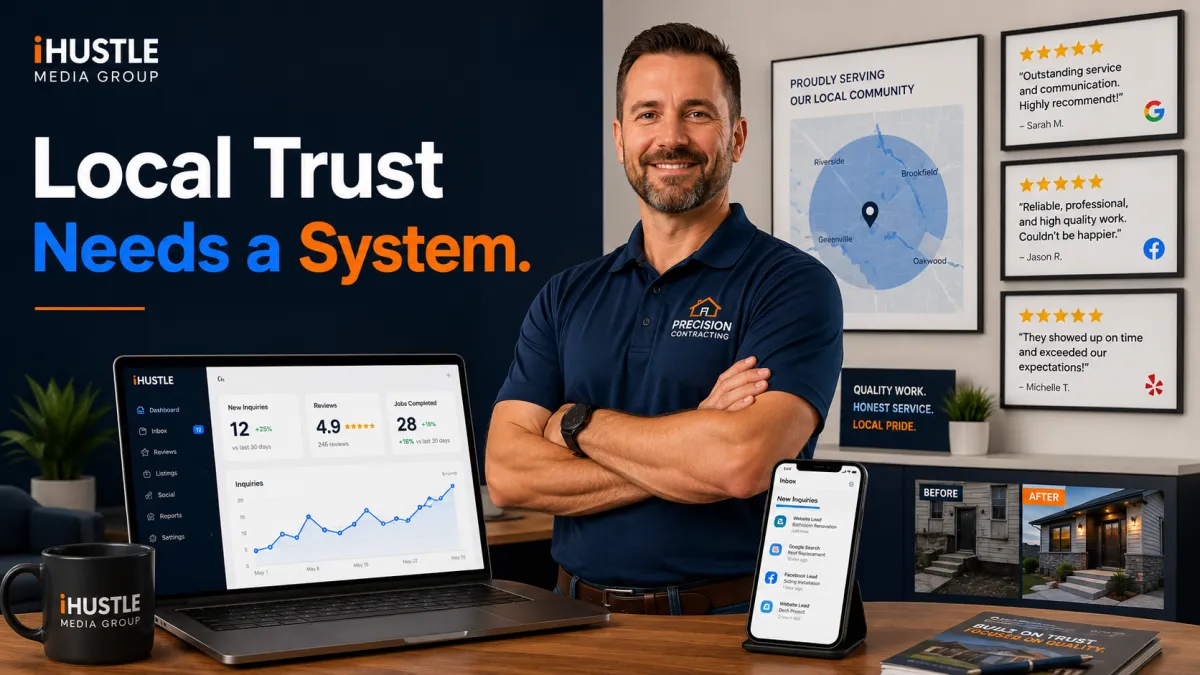
Local Trust Needs a System: How Local Businesses Can Turn Community Credibility Into Real Leads
Local businesses already have something national brands spend millions trying to create.
Trust.
You are in the community. People recognize your name. They see your work. They hear about you from neighbors, family members, church members, coworkers, and other business owners. Your truck, your storefront, your posts, your reviews, your referrals, and your reputation all work together to create familiarity.
That matters.
But in today’s market, local trust by itself is not enough.
A person can trust you and still choose someone else.
Not because the other business is better.
Not because the national brand cares more.
Not because your work is not good.
Sometimes they choose someone else because the other business made the next step easier.
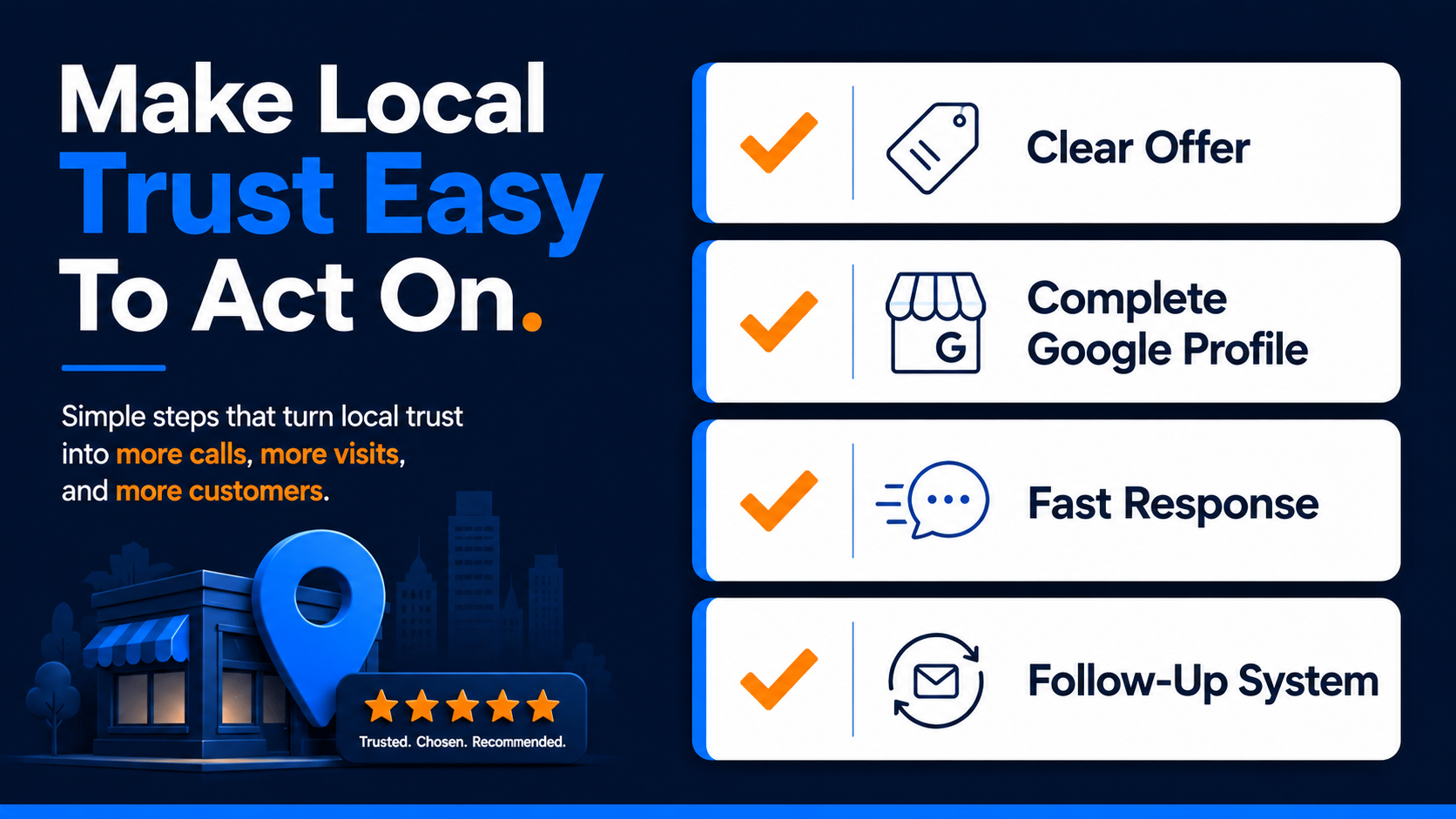
They had a clear offer.
They had a complete Google Business Profile.
They had an easy form.
They responded faster.
They followed up.
They reminded the buyer what to do next.
They had a system.
That is the hard truth.
Local businesses do not lose because national brands are automatically better. They lose when local trust is not connected to modern lead capture, fast follow-up, and a clear next step.
At iHustle Media Group, we believe local businesses can win.
But the win comes when relationship and systems work together.
The future does not belong to the biggest company.
It belongs to the business that is trusted, visible, easy to contact, fast to respond, and consistent in follow-up.
That is the shift from local reputation to local lead generation.
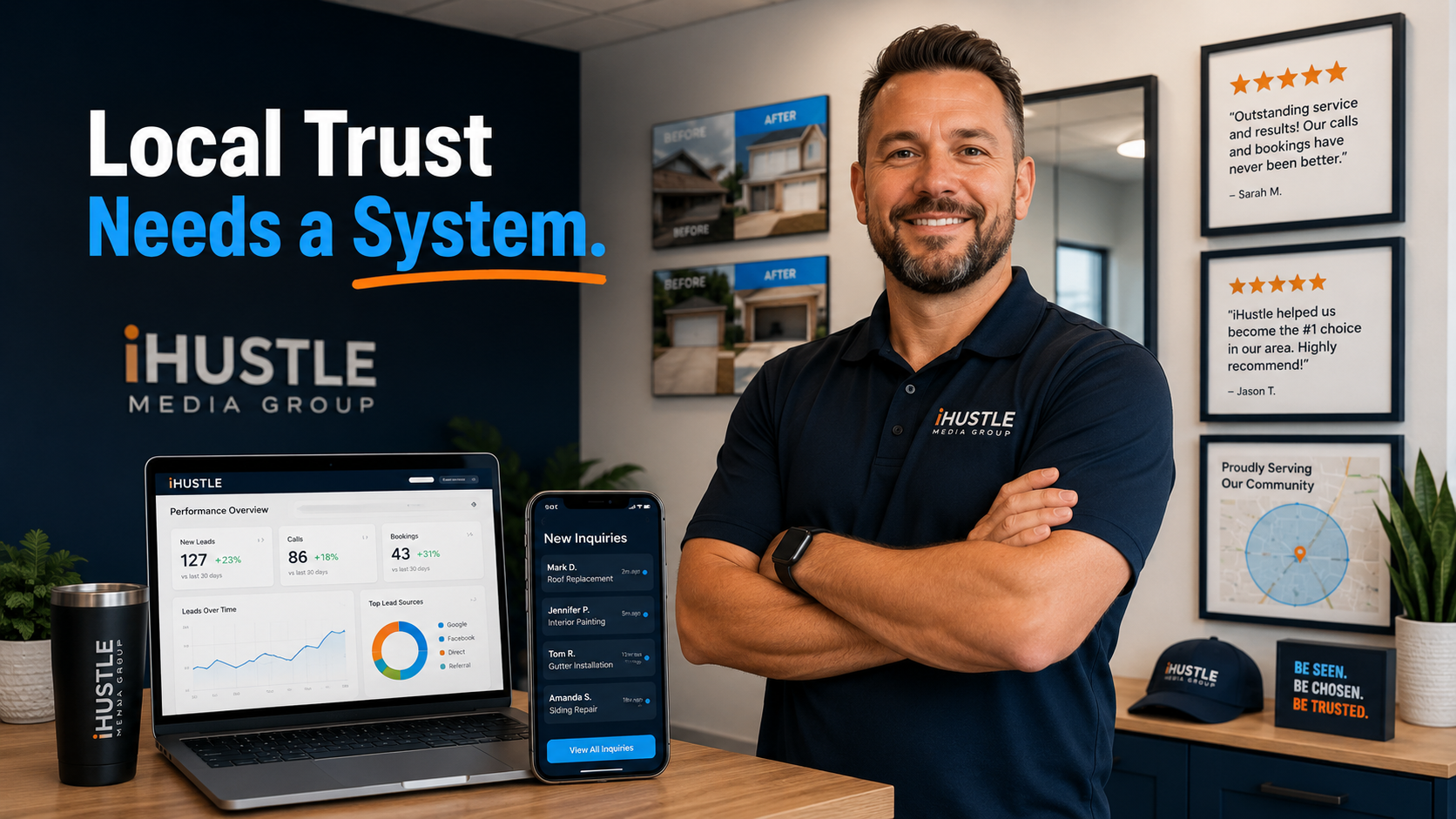
Why Local Trust Still Matters
Before we talk systems, let’s be clear.
Trust is not outdated.
Trust is still one of the strongest advantages a local business has.
People want to do business with companies they feel comfortable with. They want to see proof. They want to know someone has solved a similar problem before. They want to feel like they are not just dealing with a faceless brand.
That is especially true for service-based businesses.
If someone is hiring a roofer, HVAC company, plumber, electrician, remodeler, landscaper, painter, med spa, attorney, CPA, bookkeeper, or local professional service provider, they are not just buying a commodity.
They are trusting someone with their home, their money, their time, their family, their health, or their business.
That kind of trust is valuable.
The problem is that trust has to be supported by access.
If someone trusts you but cannot find the right information, the relationship weakens.
If someone wants to reach you but the next step is unclear, momentum fades.
If someone sends a message and does not get a response, confidence drops.
If someone fills out a form and never hears back, trust starts leaking.
Local trust is powerful.
But trust still needs a path.
The Modern Local Buyer Wants Trust And Convenience
Here is what has changed.
Customers have been trained by modern platforms to expect ease.
They can book appointments online. They can order food in seconds. They can track deliveries. They can compare reviews. They can message businesses. They can get instant confirmations. They can browse offers without speaking to anyone first.
That does not mean your business has to become cold or robotic.
It means your business has to remove friction.
A local buyer may still want personal service, but they also want an easy process.
They want to quickly understand what you do.
They want to see whether you serve their area.
They want to see proof.
They want to know how to start.
They want a way to ask a question.
They want a fast response.
They want to know what happens next.
This is where a lot of local businesses accidentally lose.
They have the trust, but the buyer journey is unclear.
A person checks the Google Business Profile, but the information is incomplete.
They see a social media post, but there is no CTA.
They visit the website, but the contact form is buried.
They send a message, but nobody responds quickly.
They request a quote, but there is no follow-up sequence.
They are interested, but the process does not guide them.
Meanwhile, a bigger company with less personal connection may have a cleaner system.
That is how local businesses lose leads they should have won.
Your Google Business Profile Is Part Of The Lead System
For many local businesses, the Google Business Profile is one of the most important digital assets in the business.
It is not just a listing.
It is often the first trust check.
Google’s own local ranking guidance says businesses with complete and accurate Business Profile information are more likely to show in local search results, and that complete information helps customers know what a business does, where it is, and when they can visit.
That matters because local buyers are often looking for confidence before they contact you.
They want to know:
Are you real?
Do you serve my area?
Are you open?
Do people trust you?
Can I see your work?
Can I call, message, book, or visit?
What do I do next?
Your Google Business Profile should help answer those questions quickly.
If your profile is incomplete, outdated, missing photos, light on reviews, unclear about services, or disconnected from your lead capture process, you are making the buyer work too hard.
That does not mean every local business needs a complicated setup.
It means the basics need to be strong.
Your name, address, phone number, website, hours, service categories, photos, reviews, service descriptions, and action links should all support the same goal:
Help the buyer trust you and take the next step.
Social Media Should Reinforce The Same Lead Path
Your social media should not be separate from your local lead system.
It should feed it.
A Facebook post, Instagram Reel, LinkedIn post, TikTok video, YouTube Short, Alignable post, or Google Business Profile update should not exist in isolation.
Each piece should support a clear business goal.
Maybe you want quote requests.
Maybe you want consultations.
Maybe you want people to take the Social Lead Web Quiz.
Maybe you want downloads of the Stop Losing Local Business guide.
Maybe you want seasonal service bookings.
Maybe you want more local reviews.
Maybe you want to educate buyers before they call.
The mistake is posting content with no clear next step.
A local business posts a before-and-after photo and hopes someone reaches out.
A contractor shares a jobsite clip and hopes people remember them.
A med spa posts a transformation and hopes people book.
A CPA shares a tax reminder and hopes someone asks a question.
Hope is not a lead system.
Every strategic post needs a job.
Not every post has to sell. Some posts build trust. Some educate. Some show proof. Some create conversation. Some invite action.
But when a post is designed to create interest, it needs a clear path.
That path can be simple:
Comment a keyword.
Request a quote.
Take the quiz.
Download the guide.
Book a consultation.
Send a message.
Visit the service page.
Join the email list.
Google also allows businesses to create posts on their Business Profile to share updates, offers, announcements, and events directly with customers on Search and Maps. That means your Google presence can reinforce the same campaigns you are already running on social media.
If your weekly theme is “storm damage roof inspections,” your Facebook posts, Google Business Profile update, email, and website CTA should all support that same message.
If your weekly theme is “why social media is not generating leads,” your LinkedIn post, blog article, Instagram caption, and quiz CTA should point to the same diagnostic path.
That is how a local business stops posting randomly and starts building a system.
The Local Lead Path
A strong local lead path does not need to be complicated.
It just needs to be clear.
Here is the basic version:
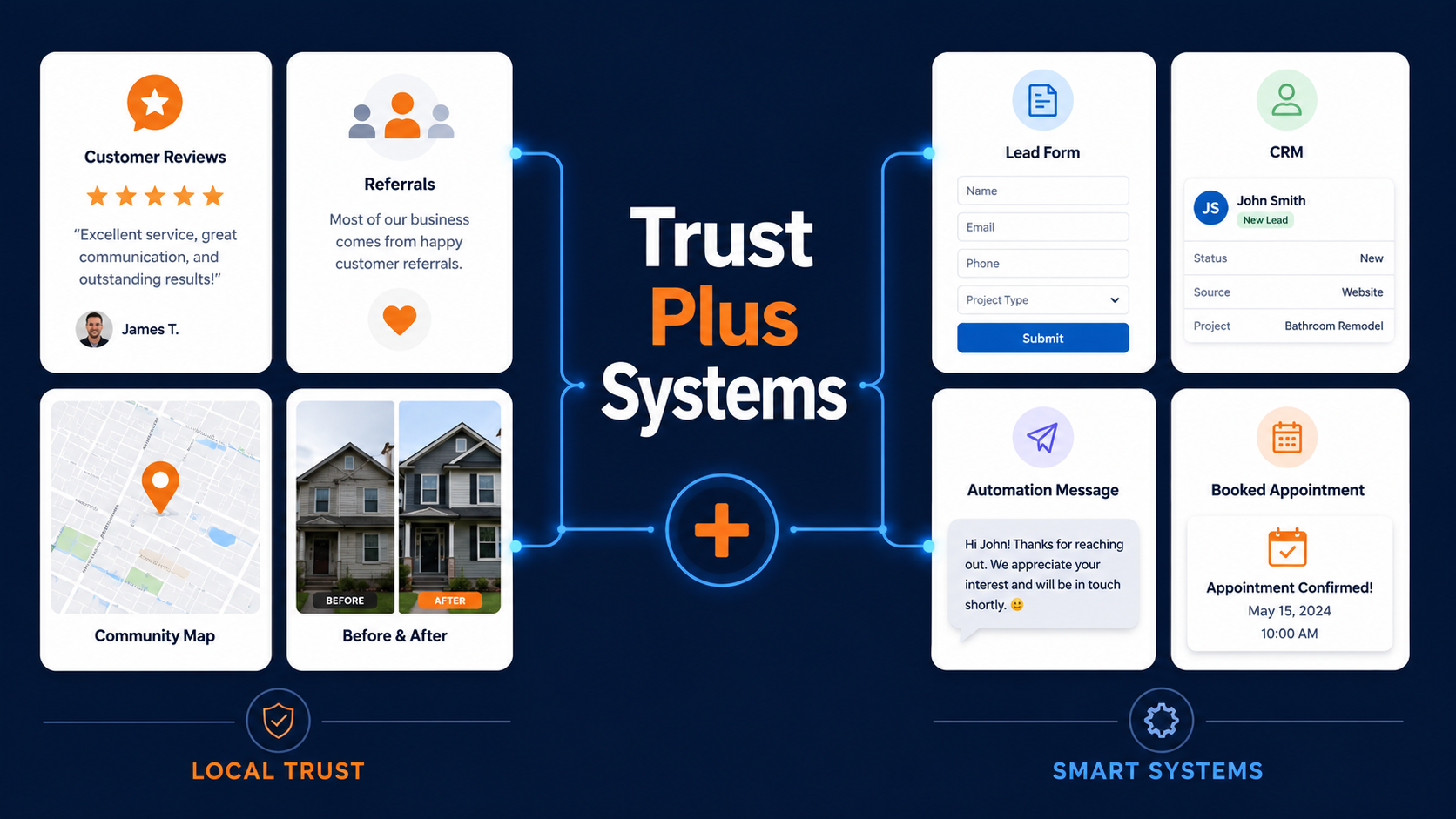
Social content creates interest.
Google Business Profile builds confidence.
A CTA gives direction.
A form, quiz, calendar, or message captures the inquiry.
A CRM organizes the opportunity.
Automation responds quickly.
Follow-up keeps the relationship moving.
The right human conversation closes the gap.
This is what we call a Social Lead Web.
It connects attention to action.
For a local business, this may look like:
Post a seasonal tip.
Invite people to comment a keyword.
Send an automated DM with a guide or quote request link.
Capture their name, email, phone number, service need, and location.
Add them to the CRM.
Send an instant confirmation.
Notify the team.
Start follow-up.
Book the call or service visit.
That is not complicated. It is structured.
And structure is where many local businesses can gain ground quickly.
Salesforce describes lead generation tools as systems that help businesses capture, track, nurture, and prioritize leads so teams can focus on the most valuable opportunities. That is exactly the mindset local businesses need.
The goal is not just to get attention.
The goal is to capture, track, nurture, and convert the right attention.
Step 1: Audit Your Local Trust Assets
Before you build more content, audit the trust you already have.
Most local businesses are sitting on proof they are not using enough.
Start with these questions:
Do you have recent customer reviews?
Do you have before-and-after photos?
Do you have photos of completed work?
Do you have videos from job sites?
Do you have customer questions you answer often?
Do you have testimonials?
Do you have screenshots of positive messages?
Do you have local partnerships?
Do you have community involvement?
Do you have years of experience?
Do you have certifications, awards, or credentials?
Do you have repeat customers?
Do you have referral stories?
These are trust assets.
They should not stay buried in your phone, inbox, or memory.
Turn them into content.
A review can become a post.
A before-and-after photo can become a carousel.
A customer question can become a short video.
A service call can become an educational story.
A testimonial can become a Google Business Profile post.
A local partnership can become a trust-building article.
Your local proof is not just evidence.
It is marketing inventory.
Step 2: Make Your Next Step Obvious
After you identify your trust assets, decide what action you want people to take.
This is where many posts fall apart.
They build trust but do not direct action.
For every strategic post or page, ask:
What should the person do next?
If the answer is not clear to you, it will not be clear to them.
Use simple CTAs.
Examples for local service businesses:
“Request a quote.”
“Book your inspection.”
“Send us a photo of the issue.”
“Comment CHECKLIST.”
“Message us the word REPAIR.”
“Schedule your consultation.”
“Download the local buyer guide.”
“Take the Social Lead Web Quiz.”
Examples for expert brands:
“Take the Ecosystem Growth Scorecard.”
“Book the AI Growth Diagnostic.”
“Download the guide.”
“Join the newsletter.”
“Register for the workshop.”
“Explore Social Lead Web.”
The CTA should match the buyer’s readiness.
A person watching an educational tip may not be ready to book, but they might download a checklist.
A person looking at a pricing page may be ready to request a quote.
A person reading a strategy article may be ready to take a scorecard.
Do not force every prospect into the same action.
Give them the next step that makes sense.
Step 3: Capture Every Inquiry In One Place
Your inbox is not a lead system.
Your memory is not a lead system.
Your voicemail is not a lead system.
Your social media DMs are not a lead system.
They are entry points.
The lead system begins when the inquiry is captured in one organized place.
That place should be your CRM.
A CRM helps you track:
Who reached out.
Where they came from.
What they need.
How urgent the need is.
Whether they were contacted.
What stage they are in.
What follow-up is scheduled.
What happened next.
This matters because leads do not usually disappear dramatically.
They disappear quietly.
A DM gets buried.
A voicemail gets forgotten.
A form notification is missed.
A text thread gets lost.
A sticky note disappears.
A team member assumes someone else handled it.
A lead asks a question, and no one follows up.
That is why every inquiry needs to enter the system.
Not later.
Immediately.
Step 4: Respond Fast Without Sounding Robotic
Fast response matters.
But fast response does not mean cold response.
Your first reply should feel human, helpful, and clear.
Meta’s lead generation guidance describes lead generation as a way for businesses to create demand and nurture intent, with effective lead generation helping businesses build trust, establish rapport, and nurture interest until people are ready.
That is a helpful frame.
The goal of the first response is not always to close the sale instantly.
The goal is to protect the relationship.
A good first response should:
Acknowledge the inquiry.
Confirm what they asked for.
Tell them what happens next.
Invite any helpful details.
Move them toward the right next step.
Example:
“Thanks for reaching out. We received your request and will review the details shortly. If you have photos, timing details, or anything specific you want us to know, reply here and we’ll use that to help point you in the right direction.”
That is simple.
It tells the person they were seen.
It gives them a next step.
It protects the trust.
Automation can send that message quickly.
Then a human can step in where needed.
That is the balance.
Step 5: Build Follow-Up That Feels Helpful
A lot of local businesses avoid follow-up because they do not want to feel pushy.
That is understandable.
But follow-up does not have to feel like pressure.
Follow-up can feel like service.
If someone requested a quote, follow up with helpful preparation tips.
If someone downloaded a guide, follow up with the most important takeaway.
If someone asked about a service, follow up with a common question.
If someone took the Social Lead Web Quiz, follow up with a simple explanation of what their result means.
Here is a simple local business follow-up sequence:
Immediate response: Confirm the inquiry.
Day 1: Ask if they have any additional details or photos.
Day 2: Share one helpful tip related to the service.
Day 4: Invite them to book or request the next step.
Day 7: Check whether they still need help.
Day 14: Send a helpful reminder or seasonal tip.
This is not annoying if it is relevant.
It is helpful.
The key is to follow up based on the signal they already gave you.
Step 6: Connect Google, Social, CRM, and Follow-Up
This is where the system starts working.
Your local marketing should not feel like disconnected pieces.
Your Google Business Profile should support your social media.
Your social media should point to your lead capture.
Your lead capture should connect to your CRM.
Your CRM should trigger follow-up.
Your follow-up should lead to a quote, call, appointment, or nurturing path.
This is what makes the business feel organized.
And when a business feels organized, trust increases.
People do not just judge your business by the final service.
They judge the whole experience.
How easy was it to find you?
How clear was your information?
How fast did you respond?
How professional was the process?
How helpful was your follow-up?
Did you make the next step easy?
A strong system answers those questions before the customer has to ask.
Step 7: Review The System Weekly
A lead system gets better when you review it.
Once a week, look at:
Which posts created engagement?
Which Google Business Profile updates got attention?
Which CTA created action?
Which leads entered the CRM?
Which leads were contacted?
Which leads booked?
Which leads got stuck?
Which follow-up messages got replies?
Which source produced the best opportunities?
Then fix one leak.
Just one.
Maybe your CTA is vague.
Maybe your Google profile is incomplete.
Maybe your form is too long.
Maybe your response time is slow.
Maybe your team is not notified.
Maybe your follow-up sequence stops too early.
Maybe your CRM stages are unclear.
Fix one leak every week, and your local lead system will get stronger fast.
What This Looks Like In Real Life
Let’s say you are a local remodeling company.
You already have before-and-after photos, customer reviews, and completed projects.
Instead of posting random project photos, you build a weekly campaign:
Theme: “Is your kitchen ready for a functional upgrade?”
Content:
Post 1: Before-and-after kitchen transformation.
Post 2: Short video explaining three signs your kitchen layout is costing you space.
Post 3: Customer review from a recent remodel.
Post 4: Google Business Profile update featuring a service spotlight.
Post 5: FAQ post answering, “How long does a kitchen remodel usually take?”
CTA:
“Request a kitchen project review.”
Lead capture:
Short form asking for name, phone, email, location, project type, and timeline.
CRM:
New lead enters “Kitchen Remodel Inquiry.”
Automation:
Confirmation text goes out.
Team notification is sent.
Follow-up sequence begins.
Human step:
Team member reviews details and calls the prospect.
That is a Social Lead Web.
You are not just posting.
You are guiding interest into a system.
Now imagine an expert brand.
Theme: “Why content is not turning into clients.”
Content:
LinkedIn post diagnosing the issue.
Short video explaining missing follow-up.
Blog post teaching the full system.
Carousel showing content-to-lead flow.
Email inviting readers to take the quiz.
CTA:
“Take the Social Lead Web Quiz.”
Lead capture:
Quiz collects name, email, business type, and system gaps.
CRM:
Lead enters the correct pipeline.
Automation:
Results email is sent.
Follow-up sequence starts.
Human step:
Qualified leads are invited to book the AI Growth Diagnostic.
Same principle.
Different audience.
Trust becomes action when there is a path.
The Big Shift For Local Businesses
Local businesses should not try to become national brands.
That is not the goal.
The goal is to keep the local relationship advantage while adding the modern systems customers expect.
That means:
Be personal, but organized.
Be local, but easy to find.
Be trustworthy, but easy to contact.
Be relationship-driven, but consistent with follow-up.
Be human, but supported by automation.
Be visible, but connected to a lead path.
That is how local businesses win.
The future does not belong to businesses that simply post more.
It belongs to businesses that make trust easier to act on.
If people already trust you, do not let that trust leak through slow response, unclear CTAs, incomplete profiles, missed messages, and disconnected systems.
Build the path.
Connect the pieces.
Make the next step obvious.
Because local trust is powerful.
But local trust needs a system.
Local Trust Lead System Checklist
Use this checklist to turn today’s article into action.
Trust Asset Audit
[ ] List your best customer reviews.
[ ] Gather before-and-after photos.
[ ] Save screenshots of positive customer messages.
[ ] Identify common customer questions.
[ ] List your strongest local proof points.
[ ] Identify community partnerships, events, or local credibility markers.
Google Business Profile
[ ] Confirm your business name, phone number, website, and hours are accurate.
[ ] Add or update service categories.
[ ] Upload recent photos.
[ ] Review your service descriptions.
[ ] Add a clear action link when available.
[ ] Create a Google Business Profile post for your current offer or theme.
Social Media
[ ] Pick one weekly theme.
[ ] Create one proof post.
[ ] Create one educational post.
[ ] Create one short video.
[ ] Create one CTA-driven post.
[ ] Make sure every strategic post supports one clear next step.
Lead Capture
[ ] Create a simple quote request, quiz, guide opt-in, or booking form.
[ ] Keep the form short.
[ ] Ask only for information needed to move the conversation forward.
[ ] Tell people what happens after they submit.
[ ] Connect the form to your CRM.
CRM And Follow-Up
[ ] Add every new lead to the CRM.
[ ] Track lead source.
[ ] Create simple pipeline stages.
[ ] Send an immediate confirmation message.
[ ] Notify the team.
[ ] Start a helpful follow-up sequence.
[ ] Review stuck leads weekly.
Weekly Review
[ ] Review which content created engagement.
[ ] Review which CTA created action.
[ ] Review which leads entered the CRM.
[ ] Review which leads were contacted.
[ ] Review which leads booked.
[ ] Fix one leak before creating more content.