

How to Build an Automated Sales Funnel in Ferguson, MO
An automated sales funnel should move prospects forward, not leave follow-up to memory. For a Ferguson, MO business, it uses prospect information and actions to guide each lead from first contact to a relevant next step, such as an educational email or sales conversation. This keeps the journey organized without making every interaction feel like a generic blast.
Prospects need timely, useful communication before they’re ready to buy. The challenge is creating a process that responds to what they actually do, rather than sending everyone the same message or relying on someone to remember each follow-up.
This guide explains how to map the funnel stages, qualify leads with practical scoring, and use behavioral email triggers to send relevant follow-ups. You’ll also learn how to build a step-by-step system for your Ferguson business, identify where automation can reduce manual work, and recognize when a prospect is ready for a direct sales conversation.
Key Takeaways
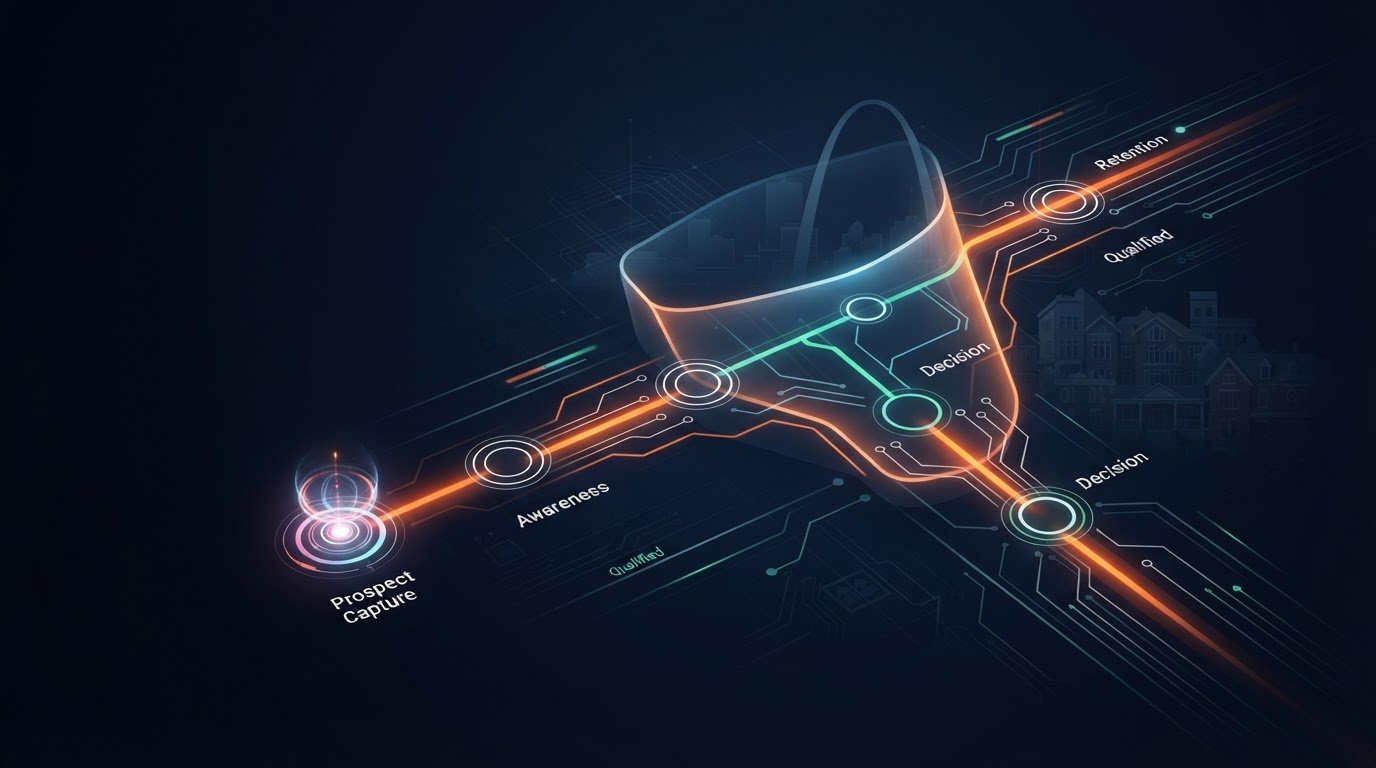
- Map the prospect’s journey from first awareness through follow-up and retention to reveal where timely automation can help.
- Use clear lead criteria to distinguish prospects who need education from those ready for a sales conversation.
- Trigger emails from meaningful actions, then tailor the message to the prospect’s interests and stage.
- Connect lead capture, customer records, and follow-up workflows so prospects move through one coordinated process.
- Identify the manual bottleneck that is slowing your funnel, then choose a focused next step to improve it.
Automated email campaigns and behavioral triggers
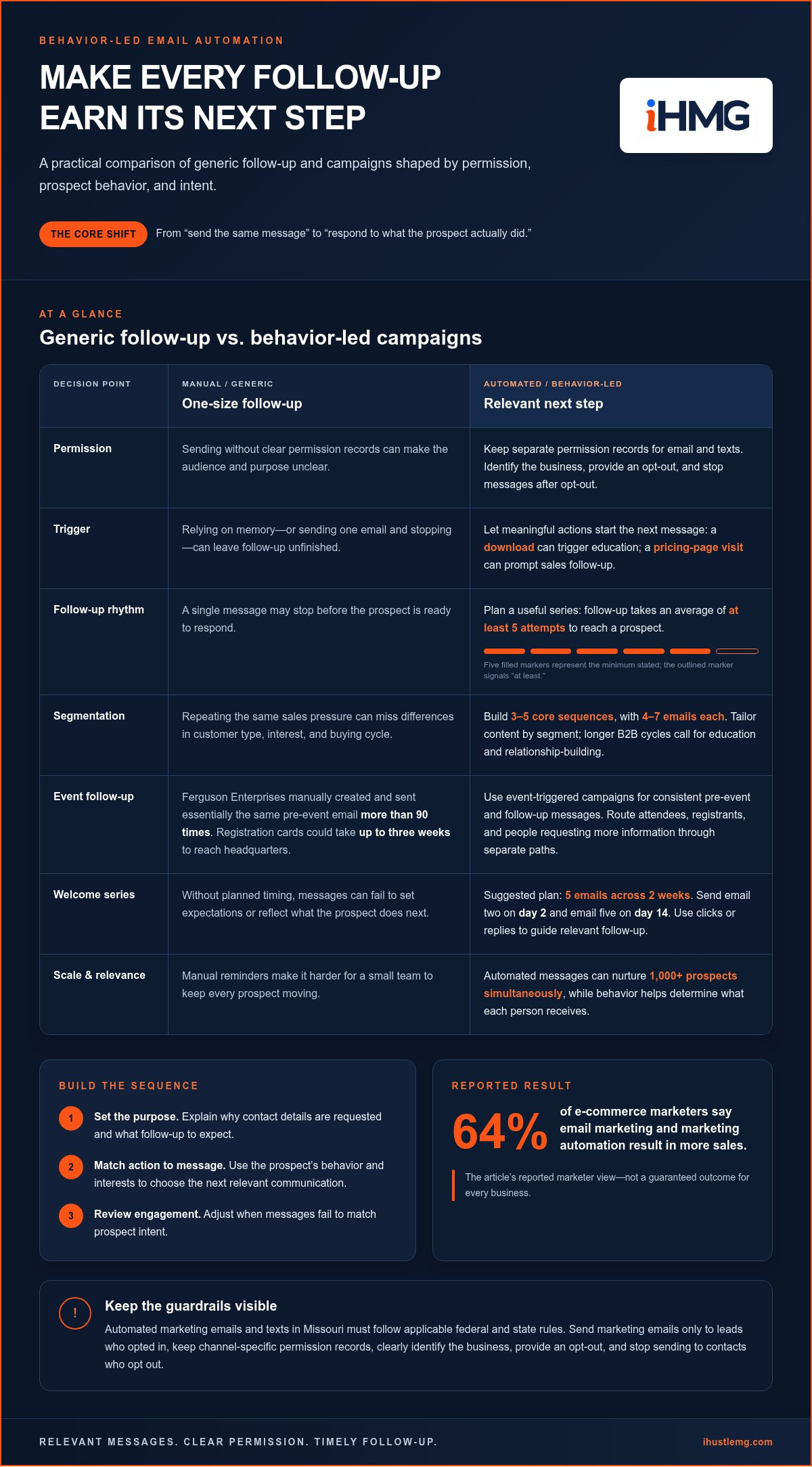
Automated marketing emails and texts in Missouri must follow applicable federal and state rules. Keep separate permission records for each channel, identify your business clearly, provide an opt-out, and stop sending messages to contacts who opt out.
- Set the permission and purpose before collecting contact details. Consider asking prospects for permission before sending automated marketing emails. Explain why you’re requesting their information and what follow-up to expect. Record permission for texts separately instead of assuming an email signup covers SMS. This gives each campaign a clear audience and relevant purpose.
- Build email follow-ups around lead behavior. A download can trigger an educational message, while a pricing-page visit can prompt a sales follow-up. Marketing automation can keep a sequence moving after a prospect’s action, rather than relying on manual reminders. Follow-up takes an average of at least 5 attempts to reach a prospect, so plan a useful series instead of sending one email and stopping.
- Segment campaigns by customer type and interest. Create 3-5 core sequences, with 4-7 emails in each, then tailor content to each segment. For example, a longer B2B buying cycle calls for education and relationship-building, not repeated sales pressure. A small sales team can nurture 1,000+ prospects simultaneously through automated messages, while still using behavior to decide what each person receives.
- Automate repeatable event and trade show follow-ups. Ferguson Enterprises manually created and sent essentially the same pre-event email more than 90 times. Trade show registration cards could also take up to three weeks to reach its headquarters. An event-triggered campaign can send consistent pre-event information and follow-up messages, while registration details enter the workflow sooner. Use separate paths for attendees, registrants, and people who request more information.
- Design a welcome series with specific timing. A suggested sequence uses five emails across two weeks. Send the second email on day two after signup and the fifth on day 14. Use the first message to set expectations, then let actions such as a click or reply determine the next relevant follow-up. Review engagement and adjust the sequence when messages fail to match prospect intent.
Personalized messages such as birthday greetings, coupons, exclusive offers, and free trials can nurture leads. The suggested welcome sequence consists of Five emails over two weeks, with its second email sent on Day 2 after signup. In e-commerce, 64% of marketers say email marketing and marketing automation result in more sales. Send automated marketing emails only to leads who opted in, and reassure customers that follow-ups will be relevant.
What is an Automated Sales Funnel?
Compare agencies and software providers by implementation support, CRM integration, workflow control, reporting, and system ownership. Avoid disconnected records, duplicate messages, and automations without a clear handoff to a person.
Map Funnel Components and CRM Integration
Map how prospects move from first contact to a sales conversation. A funnel typically connects lead capture, qualification, follow-up messages, and conversion tracking. Your CRM should hold each contact’s record and relevant interaction history, while integrations pass updates between forms, email tools, and sales workflows. Check that every transition preserves accurate records rather than creating duplicates.
Then identify the handoff rules. For example, a completed inquiry form can create a CRM record, assign a lead stage, and trigger a relevant response. Mapping the existing journey can reveal 5-10 automation opportunities. Prioritize the steps that remove repeated manual work without hiding important decisions from the sales team.
Build the Funnel Step by Step
Automate one journey first, such as a prospect requesting a service estimate. Define the entry point, next message, and action that moves the prospect forward. Avoid building a complex workflow before confirming that every CRM field, integration, and handoff supports that journey.
Set a conversion goal for each stage, then check that the system records it consistently. A form submission, booked call, or signed proposal can mark a meaningful transition. Track the same event across your CRM and connected tools so the conversion rate reflects actual progress, not disconnected activity.
- Define the funnel stages. Label the steps prospects actually take, from first inquiry through purchase and retention. For a local service business, a simple path might run from website inquiry to qualification, estimate, decision, and post-purchase follow-up. Tie each stage to a clear action so the team knows what progress looks like.
- Set practical qualification rules. Choose observable criteria, such as service need, timing, or engagement with key information. A sample scoring model might add 5 points for opening an email and 20 points for visiting a pricing page. Treat those values as starting examples, then refine them based on which behaviors correlate with real sales conversations.
- Connect the tools and test the workflow. Link your forms, CRM, email platform, and reporting tools through available integrations. Submit a test inquiry and track its record through every step. Confirm that the right messages are sent, the assigned owner receives the handoff, and the CRM records the interaction without duplicating the prospect.
- Review performance and adjust. Compare stage movement, response patterns, and conversion rates to spot bottlenecks. If prospects repeatedly stall after receiving an estimate, examine the timing and usefulness of the follow-up. Change one workflow element at a time, then assess whether the updated process supports clearer decisions and more consistent progress.
A focused funnel system assessment can help identify workflow gaps before they become embedded in your process.
Awareness, consideration, decision, and retention stages
Build four connected stages and match each message to the prospect’s next decision. A Ferguson service business can use this path to guide people from first awareness to repeat engagement.
- At awareness, help the right prospects recognize their need. Use a focused landing page, educational post, or introductory guide to explain the problem you solve. For example, a local consultant could offer a short checklist to help visitors identify gaps in their sales process. Record each inquiry’s source and stated interest, then send a relevant next step. Don’t push a proposal before someone understands the value of addressing the problem.
- In consideration, build trust and qualify intent. Send useful information that answers the questions prospects raise, such as process, fit, or expected outcomes. Apply a lead score to organize follow-up: scores of 0-30 enter an educational sequence, 31-70 indicate marketing-qualified leads, and 71-100 indicate sales-qualified leads. Route prospects scoring 71-100 to a sales representative immediately. Treat points as a signal to review, not a substitute for understanding the person’s needs.
- At decision, make the next action clear. When a prospect is ready, send a tailored proposal or invite them to discuss the details. Connect proposal follow-up to the action they took, such as opening the document or replying with a question. After verbal agreement, proposal automation can send reminders. Take the deposit when the client signs the proposal, as the article recommends, and record the decision in your customer relationship management system.
- Use retention to strengthen the relationship after purchase. Send post-purchase emails based on what the customer purchased and how much time has passed, rather than restarting a generic sales pitch. For example, a service business can provide relevant next steps after onboarding, then ask for a review by automated text. Track replies and review requests as separate events so follow-up reflects the customer’s experience and the relationship can continue beyond the first sale.
Make a review request a natural continuation of the service, not a separate sales message. Businesses can use automated texts to invite customers to review a purchase. Keep the wording courteous and direct, and make clear that the customer is invited to share an honest account of their experience. A brief message can acknowledge the completed work, explain why feedback is welcome, and offer a simple way to respond. Avoid pressuring customers or implying that a particular response is expected.
Use the customer’s recent interaction to decide whether a review request is appropriate, and pause further prompts if they have already replied or raised a concern. If a response points to an unresolved issue, focus the next communication on understanding and addressing it, rather than asking again for a public review. If the customer shares a positive experience, acknowledge it and keep further contact relevant to their needs. Review requests belong in the broader retention journey: listen, respond thoughtfully, and maintain a useful relationship rather than simply collecting feedback. This keeps follow-up consistent with the service the customer received.
Benefits of automating sales funnels
Automation turns a chain of reminders into a system that captures activity, responds consistently, and shows where revenue opportunities stall. Measure progress by workload and prospect movement, not by how many workflows you launch.
- Recover time from repetitive follow-up. Manual sales follow-up typically takes 3-5 hours per lead, while automated funnels reduce follow-up work to under 1 hour per lead. Start by automating one repeated task, such as sending an acknowledgment after an inquiry. Keep human attention for conversations that require judgment, tailoring, or a clear answer to a prospect’s concern.
- Respond while interest is active. A 24-hour delay in responding can contribute to stalled deals. An automated acknowledgment can confirm that an inquiry arrived and explain the next step, while routing the lead to the right person. For example, a Ferguson service company can trigger a response after a website request, then alert its sales team to follow up personally.
- Expand capacity without adding the same amount of manual work. A small team can manage 50-100 active prospects manually, while automation can nurture 1,000+ prospects simultaneously. That capacity matters when inquiries arrive together or prospects need different information. Use segmentation and engagement signals to keep messages relevant; a larger contact list alone doesn’t create better sales conversations.
- Improve the odds of consistent conversion. Companies implementing automated sales funnels see 35-50% higher close rates compared with purely manual approaches. Marketing automation also reports an average ROI of $5.44 per $1 spent and a 451% increase in qualified leads. Treat these figures as performance benchmarks, then track your own conversion rate from inquiry through sale to find which stage needs attention.
- Make lead capture and measurement part of the same process. Automatic lead capture eliminates 5-7 hours of manual data entry weekly. Connect each form submission to a customer record, lead stage, and follow-up task, then review the resulting pipeline. A funnel operating 24/7 can respond when a prospect requests information at 2 AM, but the useful benefit is a recorded, timely next step, not automation for its own sake.
For a Ferguson business, start with one bottleneck: slow replies, repeated data entry, or inconsistent follow-up. Automate that step, compare workload and conversion movement with the previous process, then expand only when the results support it.
How can a Ferguson business build an automated sales funnel step by step?
- Trace the customer journey before choosing automation. Write down how a prospect moves from first contact to a decision. Use a real Ferguson business example, such as a homeowner requesting a renovation estimate: note where the inquiry arrives, who responds, and what happens after the estimate. Mapping the existing journey usually reveals 5-10 automation opportunities. Start with the handoffs that repeatedly slow or interrupt progress.
- Choose one measurable goal for the first workflow. Decide what the system should improve, such as recording inquiries accurately or ensuring every estimate request gets a next step. Define the event that counts as progress, such as a completed consultation booking. A narrow goal makes it easier to see whether the workflow works, without confusing more emails or system activity with actual sales progress.
- Set up lead capture and customer records. List the information a sales representative needs to respond appropriately, such as the prospect’s service need, preferred contact method, and inquiry source. Connect the form to the customer record so those details transfer automatically. Submit a test inquiry from a phone and desktop, then check that each record reaches the right stage without missing information or duplicates.
- Write the decision rules before building messages. Specify what happens after each action. For example, an estimate request can create a sales task, while a guide download can start educational follow-up. Define when a prospect leaves one path and enters another. Clear rules prevent conflicting messages, repeated outreach, and sales alerts that don’t reflect the prospect’s actions.
- Test the entire workflow with realistic scenarios. Act as a new inquiry, a returning prospect, and someone who stops responding. Confirm that each test creates the intended record and message and sends the right team notification. Check how the system handles incomplete forms and duplicate contact details. Fix errors before expanding the workflow, because an incorrect rule can affect every prospect who meets its conditions.
- Review results and expand with evidence. Compare the workflow’s outcomes against the goal you set, such as recorded inquiries or completed sales conversations. Identify where prospects stall, then adjust the relevant message, rule, or handoff. Once the first workflow operates reliably, use the remaining opportunities from your journey map to prioritize the next improvement. Build a clearer funnel workflow by starting with the customer journey and its biggest handoff gaps.
IHustle Media Group: Social Lead Web
iHustle Media Group’s Social Lead Web helps businesses turn social media engagement into qualified business opportunities. It fits when prospects interact with your content but the next step toward an inquiry or sales conversation isn’t clear. Rather than treating every interaction as a finished lead, build a smoother path from interest to follow-up.
For a broader automation setup, consider iHustle Media Group’s AI System Diagnostic and Authority Accelerator. The diagnostic evaluates how your systems support lead generation, while the Authority Accelerator can help strengthen your business’s authority as part of your growth strategy. Choose the next step based on the bottleneck you’ve identified.
Contact iHustle Media Group to discuss how Social Lead Web can fit into your lead-generation process.
Turn your funnel into a stronger growth engine
The next move isn’t adding automation for its own sake. Identify where your process loses momentum, then decide what a prospect should experience instead. That focus gives your automated sales funnel in Ferguson, MO a clear purpose: connect each interaction to a useful next step and make it easier to see where your process needs attention.
When social engagement isn’t becoming qualified opportunities, Social Lead Web streamlines that transition. If you’re assessing how your systems support lead generation, the AI System Diagnostic can help identify opportunities. The Authority Accelerator supports businesses building authority as part of their growth priorities. Each offering addresses a different point in the larger growth system.
Start with the bottleneck that matters most to your business, and explore a practical next step. Contact iHustle Media Group to discuss how its offerings could support your growth strategy.
Build with intention, measure what moves, and keep improving the path from interest to opportunity.
Frequently Asked Questions
How quickly can I see results from automation?
Many small businesses see improvements in lead generation and conversion rates within weeks of implementing automation. To assess early progress, compare a specific workflow before and after launch: check whether new inquiries receive the intended follow-up and whether staff can find each lead’s status. Then review completed sales conversations and conversions over time. Separating setup activity from customer outcomes keeps the evaluation focused on business impact.
What is an automated sales funnel and how does it work?
An automated sales funnel coordinates prospect interactions and follow-up based on their actions. For example, after someone registers for a webinar, the system can record the registration and send relevant information. If the person attends, follow up with a related next step; if they book a consultation, stop sending webinar reminders. These rules keep communications aligned with what each prospect has already done.
What are effective lead-generation strategies for businesses in Ferguson, MO?
For businesses in Ferguson, MO, an automated sales funnel can connect useful local content to a clear path to inquiry. Share content that demonstrates your expertise to prospects in St. Louis, St. Charles, St. Peters, Florissant, Hazelwood, Ferguson, and Chesterfield, then direct interested readers to a relevant next step. A well-designed automated sales funnel for a Ferguson, MO business can turn social engagement into qualified conversations instead of leaving interest without follow-up.